

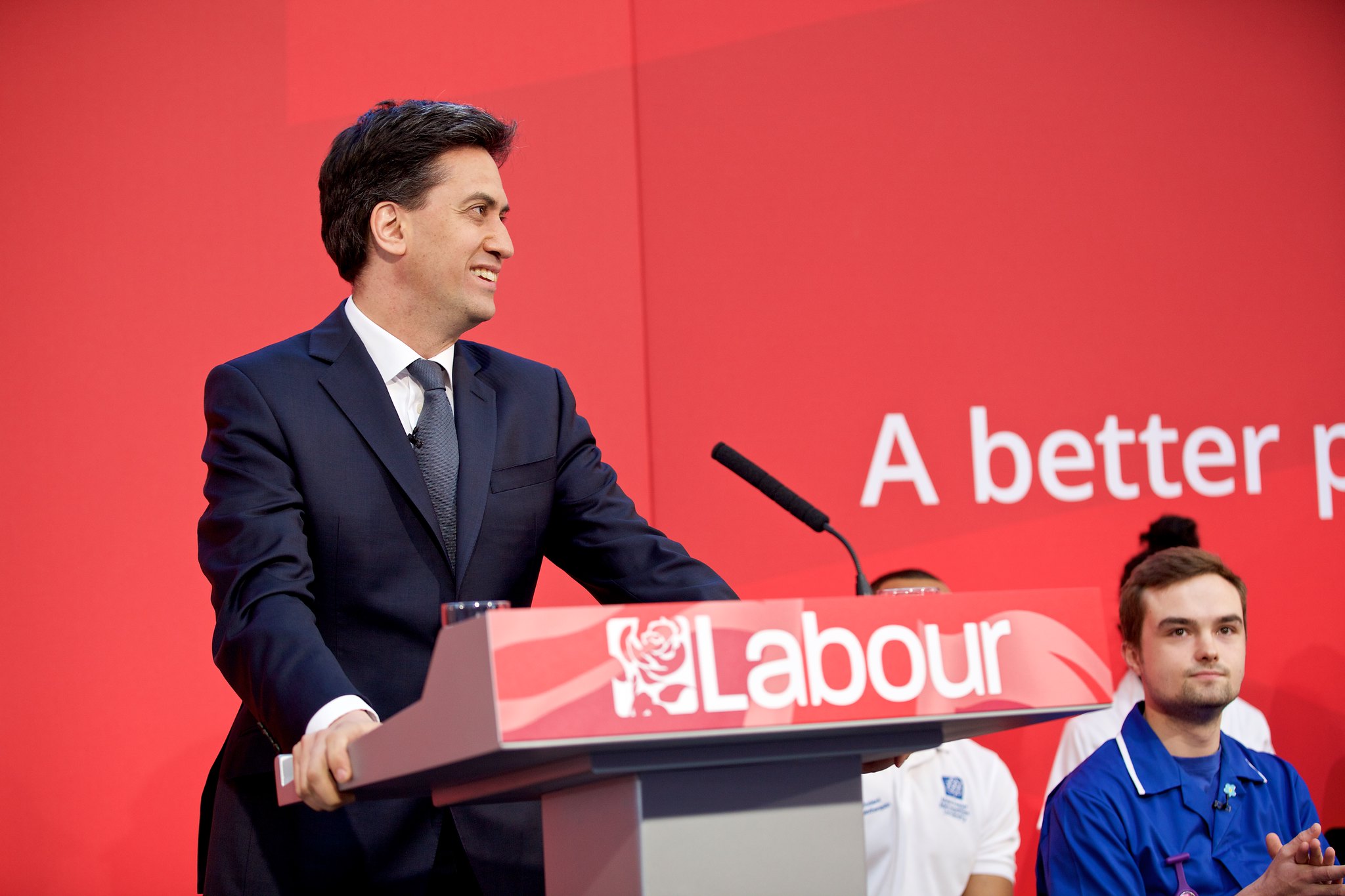
In typical op-ed fashion, as soon as it came to finally write this piece, The Guardian beat me to the punch; it’s like the political commentators' version of Sod’s Law. What I did love about Gaby Hinsliff’s article, however, was how it subtly presented the oddities of Energy Secretary Ed Miliband. That’s not a pejorative ‘odd’, either – Miliband simply isn’t the average Parliamentarian. The Doncaster MP juxtaposes Westminster’s dearth of deep thinkers, and while it was hard to see that during his tenure as Labour leader (his pivotal ‘one-nation Labour’ branding was plagued with issues from the outset), his detail-oriented nature now often shows itself. Miliband is that rarest of things in politics: someone who learns from mistakes. Even to those outside of the so-called ‘Milifandom’, such a trait ought only to be admired.
It’s peculiar to be painting such a positive picture of Miliband when his leadership was fraught with issues. Does anyone remember the Ed Stone? Miliband quite literally had an over-eight-foot rock engraved with his manifesto pledges, in what was meant to symbolise his unflinching commitments to the British public. Instead, with the hindsight of Labour’s pending 2015 General election defeat, it was evidently the ‘heaviest suicide note in history’. Since the end of New Labour, the party’s history has been defined most heavily by the current Energy Secretary; when he floundered and appeared weak, so did the party, and vice versa. Even amid contemporary turbulence in the Starmer administration, Labour is evidently a more organised entity than it was in the mid-2010s, quite simply because it has taken the reins of government, and commentators have been lauding Miliband’s work ever since.
The output of the Department for Energy Security and Net Zero has been rather remarkable, in fairness. A green energy deal with California, power grid decarbonisation, and major government-funded solar panel investment, with the department’s avid renewable pursuit only further justified by the Iran conflict’s impacts on the cost-of-living. Miliband’s ability to think deeply, scour over details, and understanding of legislative interactions have culminated in the government’s perhaps highest-yielding department. Becoming an influential tinkerer, Miliband has long had a knack for this sort of political operating; it’s just now he’s got his eggs in a row, with a department running how he wants it (infuriating the political right in the process), free from the burdens of leadership, which proved all too much for him previously. The result of all of this, and Starmer’s personal unpopularity, is that a lot is being made of Miliband, more than perhaps even he would have supposed. So much so that The Week published an article weighing up differing perspectives on whether he’s the ‘most powerful man in Westminster’, which, of course, he isn’t.
Miliband has garnered significant political capital for several reasons. Not only his output as Energy Secretary, but also his historic failings as a leader, both making him well-known and an easy cannon fodder for the British right, alongside his much-discussed left-wingness relative to the cabinet’s other big beasts.
While there is praise to be given, there are also many faults to deliberate. His failings as a leader, discussed sporadically throughout this piece, still linger in the memories of Labour members. He only had such an opportunity because he (in a retrospectively foolish move for the health of the country) challenged his much more experienced brother, David, on an anti-government platform, closing the door on the social democratic policy of the previous decade and a half. Cornered into an ineffective agenda (that which was carved onto the dreaded Ed Stone), the trajectory Miliband set continued as he was replaced by Jeremy Corbyn, who pushed the party further left amid many a notable failure, allowing anti-Semitism to fester and opting not to fight against Brexit with any vim. While Miliband cannot be blamed for all of this by any means, he still pushed the first domino in a chain that only his current boss managed to halt.
Miliband therefore succeeds in a party that has only recently recovered from his actions, however long ago they may have been. As of now, Miliband’s rise seems unlikely, regardless of the frets of commentators. As a genuine leader, he is old news. If we talk in absolutist terms as if Starmer’s political regicide is imminent (which it isn’t, but stick with me here), the more potent discussion centres around Labour’s Mayor of Manchester, Andy Burnham, who lacks Miliband’s baggage and boasts a more successful agenda to boot, turning Manchester into the nation’s second economic heart. Talking to members, those who approve of Miliband also approve of Burnham, and in a choice between the two, they’d opt for the Manchester Mayor any day. Burnham has a great ability to communicate with the disengaged working classes who have flocked to Reform, something essential for any party leader in the current climate. While Miliband has the environmental success to woo some youthful green voters, in terms of sheer numbers, Reform is the bigger fish to fry, and Burnham could undoubtedly win over Greens too, while Miliband’s renewable energy agenda will do little but entrench Labour losses to the right-wing populist sect. It’s unlikely either of these princes of the soft left will ever get a shot to lead the nation, but if one did, it wouldn’t be the Energy Secretary.
Can Miliband reach the summit of Britain? No, certainly not. But he really doesn’t need to. He has talents, undoubtedly, and is exactly where he needs to be, sitting comfortably at the desk of his department, which is firing on all cylinders to actualise his vision. He possesses the ideal traits to be a successful minister, and is far too capable to be anything less, but is too uninspiring and weighed down by political baggage to be anything more. When assessing Miliband, it’s all a matter of perspective: as a member of the current cabinet, he has been rightfully lauded, but as a prospective future Prime Minister, one cannot help but furrow one's brow.
.svg)
Interested in UK, US, and ideology politics, he holds editorial positions at various publications and currently serves as Warwick Labour’s Deputy Chair. Beyond politics, he is a cinephile who enjoys Fantasy Premier League and F1.
.svg)


.jpg)
.svg)
.svg)