

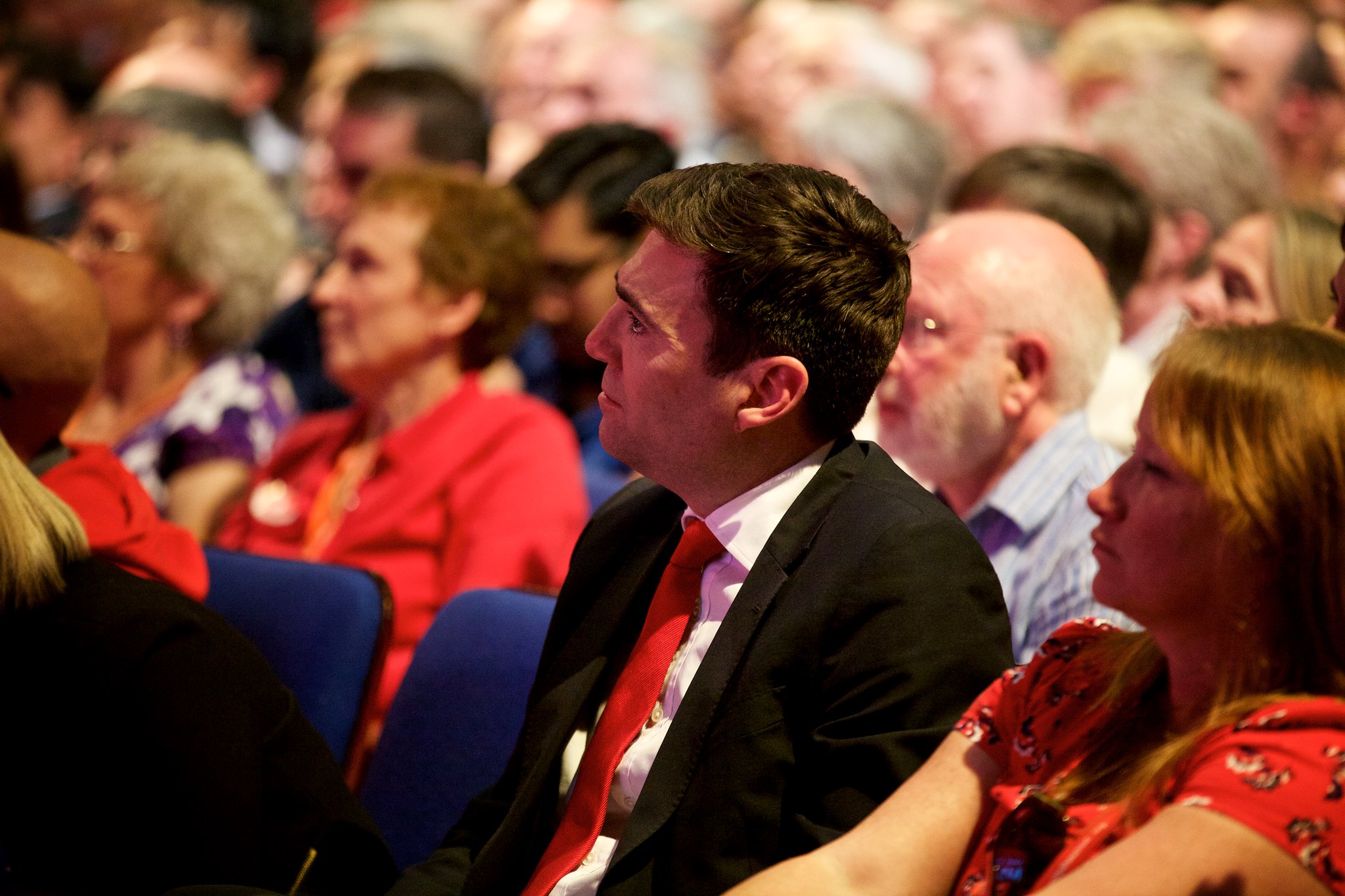
On January 26th, the somewhat expected news broke that Labour’s National Executive Committee had blocked the former MP and current Mayor of Greater Manchester from standing as a candidate in the upcoming by-election in Gorton and Denton. The seat became obtainable following the resignation of Andrew Gwynne on the grounds of ill health. Gwynne had already been suspended from the Labour Party last year for offensive messages in a WhatsApp group.
Andy Burnham, of course, has extensive experience in Parliament as the former MP for the Leigh constituency in Greater Manchester from 2001 to 2017. His career flourished under both Tony Blair and then Gordon Brown, with Burnham achieving continual promotions holding roles such as Chief Secretary to the Treasury and Health Secretary.
In 2010, Burnham sought leadership of the party, but lost the election to Ed Miliband, finishing a disappointing fourth out of five candidates with just 8.7% of the vote in the first round. He was again defeated in the 2015 leadership election and came a distant second to Jeremy Corbyn, who secured 59.5% of the vote to his 19%. Burnham left the Commons on May 3rd, 2017, when it was dissolved for the general election and on May 8th, he won the mayoral election in Manchester.
The official reason provided by the Labour Party was based on the expense that a subsequent Mayoral by-election for Greater Manchester would incur. However, Burnham’s continual pursuit of promotion and his ambition to lead the party has allegedly been a defining reason for the NEC to block Burnham from standing. It is a decision not made in isolation, reflecting Keir Starmer’s preference of centralised control within Westminster. The Labour leadership has focused on choosing candidates that align with Starmer’s views in an attempt to avoid expelling members who present internal challenges to the PM. Blocking Burnham therefore partially stems from concerns over a third bid for leadership and the need to prevent a potential challenge to Starmer’s tenure, an issue which would deeply divide a party already struggling to agree on policy and decisions made by their leadership.
A big challenge for Labour, both before the general election win of 2024 and during their time in government, has been factionalism within the party. Keir Starmer has presented a more centrist approach, at times leaning into the ideology of “Blue Labour” to appeal to swing voters and even appease those looking towards Reform UK. Others within the party have retained their more explicitly left-wing views, sometimes seen as Corbynite socialism such as John McDonnell and Nadia Whittome. However, many of the more left-leaning party members have been suspended from the party, including Mother of the House Diane Abbott and Your Party co-founder Zarah Sultana.
Burnham, who identifies as a socialist, has often been proposed as a potential rival to Starmer if he were to return to Westminster, shifting the party back towards a more left-wing stance. His involvement in the Mainstream movement, which aims to ‘offer the country a left politics that is both highly ambitious and achievable’, places him firmly within Labour’s soft-left tradition. Burnham’s politics are rooted in his Northern identity, demonstrated by his many clashes with the Conservative government over poor funding opportunities for Greater Manchester and the cancellation of the Birmingham to Manchester leg of HS2.
The Gorton and Denton by-election is a key point in UK politics prior to the local elections, likely to be fuelled by the dissatisfaction with the main two parties that has boosted the rise of Reform. Fifty MPs wrote a letter to Starmer in which they called the decision to block Burnham ‘a real gift to Nigel Farage.’ Removing a well-liked regional figure as an option in such a defining by-election decreases trust in the party.
In Manchester, Burnham himself felt that the Labour Party blocking his attempts to stand as a candidate would have a greatly detrimental effect on the community. Regarding his own choice to put himself forward for selection, Burnham asserted ‘it was a hard decision, but I believed I was making it in the best views of Greater Manchester, I’m elected to serve.’
Burnham told the BBC in an interview:
‘What we've built here in Greater Manchester is really special. In my view the politics of Reform threaten that and put it at risk, it's all about pitting people against each other and causing division… that was a persuasive factor in putting my name forward.’
Citing his experience in both a parliamentary and a mayoral capacity, along with his knowledge of Manchester, Burnham described himself as ‘uniquely positioned’ to fight Reform, but ultimately accepted the decision of the NEC. This decision may prove politically astute for Burnham in remaining publicly loyal. Unfortunately for Labour, the controversy regarding Burnham’s attempt to stand, combined with the Peter Mandelson scandal, may leave a bad taste in the mouth for voters. The ElectoralCalculus predicts that Reform will take the seat from Labour, one that has long been deemed a safe seat for the party, with 32% of the vote to Labour’s 22.6%, who are predicted to come in third behind the Greens’ 23.3%. If accurate, such a result would surely increase scrutiny upon the Labour leaderships' judgement and popularity.
The seat is set to be contested by a long list of candidates, including options from the far-right party Advance UK, Rejoin EU, and the Communist Party. Labour selected Angeliki Stogia as their candidate, a Labour councillor for the nearby Whalley Range ward since 2012. Stogia was quick to adopt a similar tone to that of Burnham, focusing on ‘rejecting division’ and representing ‘unity, fairness and hope.’ Burnham took to X to congratulate Stogia and offer his support ‘whenever you need me.’ He has since been seen campaigning alongside the candidate and other party members, eager to demonstrate he is very much still welcomed within the local and national party and committed to its electoral success.
Burnham’s own reputation appears resilient to the clashes with the NEC as it appears that Burnham remains relatively popular with the British public. A YouGov survey found that 44% of all Britons believe that blocking Andy Burnham’s candidacy was the wrong decision, to just 12% who felt it was the right decision. Amongst Labour’s 2024 voters, 40% suggested that Andy Burnham would be a better PM than Keir Starmer, compared to just 10% who believe he would be worse. Such figures underscore the unresolved question of Labour’s future direction.
The relationship between Burnham and Starmer remains complicated. Following the Scottish Labour leader Anas Sarwar’s call for Starmer to resign on February 9th, Burnham urged colleagues to be ‘facing in the same direction and pulling in the same direction around our ambitions.’ He maintained his own position regarding the need for the government to be more ambitious but confirmed that ‘yes, he [Starmer] has my support,’ a comment that seemed unlikely just two weeks previously.
For now, Burnham remains outside of Westminster, but deeply inside the conversation of Labour's future aims and leadership choices. The party remains one cautious of internal rivals, perhaps still reeling from the infighting of the Corbyn years, determined to maintain discipline in turbulent political times. But do voters see this discipline as strength or weakness? The results on February 26th will reveal more.
.svg)
Megan is an MA History student at the University of Birmingham. Her main interests lie in UK politics and current affairs, interested in social and cultural impacts. Aside from politics, she enjoys visiting historical sites, reading and hiking!
.svg)


.jpg)
.svg)
.svg)