
Image - Pixabay
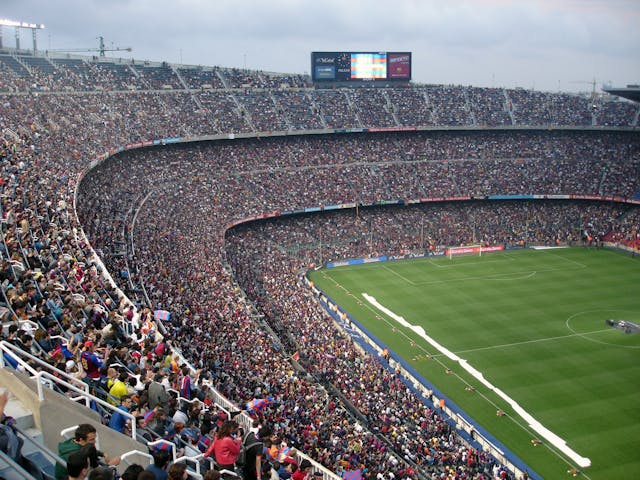
The 23rd football World Cup is taking place this summer in 16 host cities across Canada, the United States, and Mexico. This tournament will be the largest in the events’ history, featuring 48 teams and welcoming an estimated 6.5 million fans, greatly surpassing previous records. Moreover, it is predicted that over 6 billion people will watch some of the tournament, making it one of the largest sporting events in history. But this event also poses a huge political risk, and a boycott would be the best thing for all of us.
Anyone with access to the news or to the internet is aware, at least peripherally, of the nightmare that is Donald Trump’s second presidency. In just a year in office he has managed to turn America into somewhere that resembles mid-1930s Germany, while simultaneously dismantling the hallmarks of the post-war international order.
Domestically, the new state of affairs seems more like a dystopian fiction than reality. In 2025, the formidable Immigration and Customs Enforcement (ICE) have deported over 600,000 people, many without just cause. Law-abiding US citizens are leaving for work or school to never make it home. Furthermore, January 2026 saw the unjustifiable shootings of Renee Nicole Good and Alex Pretti in Minneapolis by ICE officers, sparking outrage but triggering minimal repercussions for the officers involved, and no consequences for the administration endorsing it. The US is also now home to blatant corruption; the company Coinbase, for example, made political contributions and donated to Trump’s inaugural fund and ballroom project, and subsequently had the civil enforcement action against them dropped. The new America is one where ‘those who pay get to play’.
Internationally, there is no end to the list of shocking things Trump has said and done. In just the last month he has orchestrated the capture of Venezuelan President Nicolas Maduro, the legality of which is questionable to say the least, has repeatedly threatened to “take” or “buy” Greenland, a territory owned by fellow NATO member Denmark, then proposed tariffs to his supposed allies that opposed his plans, and has disrespected NATO soldiers who he claims the US have ‘never needed’, prompting outrage and condemnation from many military figures and international leaders.
So, what does this have to do with the World Cup? Well, everything. Though technically the tournament is split across the 3 host countries, America is the clear focus. As such, the country is about to receive a huge amount of attention, likely the first positive attention it has received in a while. This greatly benefits Trump’s administration, both domestically and internationally. Firstly, assuming the event goes well, it puts a big shiny spot on Trumps’ legacy, garnering him the praise he desperately seeks. Secondly, and more importantly, it works as a distraction. With domestic and international audiences focused on the World Cup they are not focusing on all the awful things going on; the corruption, the ICE raids, the failure of peace in Gaza, the actions in Venezuela, the dealings with Russia, the disregard of NATO, the efforts to take Denmark, the stagnation of the US economy, the Epstein files, and so on and so on.
The World Cup is also dangerous because of the soft-power and diplomatic leverage it gives Trump. With all the countries involved, all the tourists arriving, all the sponsors and organizations involved, the tournament and its global significance become a weapon that Trump and his people can wield. The greatest risk of the World Cup, however, and potentially the greatest benefit it has for Trump, is that it provides legitimacy. By travelling there in their thousands and attending matches, the American people and the rest of the world, including the international leaders that support the event going ahead, are effectively saying that everything America is doing is okay. That despite the list of horrors, we are still willing to give Trump our time, money, and endorsement. In short, the World Cup is a gift for Trump and a surrender for the rest of us.
This is not the first time that an international sporting event has presented a political risk. The 1936 Olympics were hosted by Nazi Germany and were attended by 49 countries, despite a movement of people calling for a boycott. Much like this World Cup is set to be for Trump, the Berlin Olympics were a gift to Adolf Hitler and his regime. It was effective propaganda for the German people, and presented a strong, united Germany to the rest of the world, masking both the increased targeting of Jews and other minorities, and the increased militarism. The world attended, legitimizing Hitler’s regime, and 2 years later Austria and Czechoslovakia were invaded.
In 1980 the Olympics were held in the Soviet Union, but this time the world reacted. Following the USSR’s invasion of Afghanistan in 1979 there was a large boycott, consisting of around 60 countries, led by US President Jimmy Carter. Though the Olympics went ahead and still offered effective internal propaganda, the world refused to stand by, thus demonstrating their disapproval of the USSR’s actions.
The case for a boycott now is abundantly clear. 2026 cannot be a repeat of 1936, unless you want the next decade to be marred by conflict and the persecution of innocent people. Legitimizing Trump’s regime, distracting from the atrocities occurring inside and outside of the US, and providing this boost to his presidency will be disastrous. There are some movements calling for a boycott, but they don’t have nearly enough traction. The UK cross-party movement has only 26 signatories. When the case for a boycott is so obvious, why is nothing happening?
Depressingly, the chances of a boycott going ahead are incredibly slim. The first reason for this is the actions of FIFA. FIFA president Gianni Infantino has made a great show of cosying up to the American President, so much so that he presented him with a FIFA peace prize, a new award created especially for Trump, at the World Cup draw. Infantino also joined Trump at his inauguration, at a peace summit in Egypt on Gaza, and was even late to the FIFA congress in Paraguay because he was attending Trump’s Middle East tour, causing UEFA delegates to walk out. This is a pattern for Infantino, having closely aligned himself with Vladimir Putin around the Russia World Cup in 2018, presenting him with the “Order of Friendship” medal, despite the various concerns over Russia at the time. It’s also worth mentioning that FIFA made $7.5 billion for the 2022 World Cup, with this year likely to be even more lucrative. So, if anyone is hoping that FIFA and Infantino may suddenly develop a conscience and call it off, then they are sorely mistaken.
Another factor that makes a boycott improbable is footballs immense global popularity and how much it means to fans. In the UK it is the most popular sport by a considerable margin, with 46% of adults identifying as football fans. Sure, there may be a few politically minded fans who refuse to attend or engage with the tournament, but the vast majority care far more about the actual football than the surrounding politics and are willing to bypass moral concerns and enjoy the event they’ve been waiting 4 years for.
The only other way there could be a boycott would be if it were led by global leaders, like what occurred in 1980. However, the lack of backbone these leaders have displayed regarding Trump in the last year makes that laughably unlikely. Though they have their reasons for doing so, leaders have rolled over for Trump time and again, so why would this be any different, particularly when you consider the popularity of the sport. Take Kier Starmer, whose popularity ratings are shockingly poor – the chances of him pulling any British teams from the World Cup, and thus having to take the immense backlash that would follow from the football-obsessed British public, are miniscule.
Odds are, the boycott simply won’t happen. Anyone with the power to initiate it won’t, being too concerned with appeasing Trump and appeasing fans. The world cup will go ahead, showering Trump with attention and legitimacy and worsening the already dismal state of affairs, domestically and internationally. It’s the boycott we need, but it’s the boycott that we won’t get.
.svg)
Rosie is a second year Politics and International Relations student at the University of Manchester. She's on the committee for the UoM politics society, and is interested in justice, the far-right and climate. Outside of politics I enjoy singing, reading, baking and travelling whenever I can.
.svg)


.jpg)
.svg)
.svg)