

.svg)
Neoliberalism is widely regarded as the defining hegemonic form of governance under modern day capitalism. It is also perhaps one of the most misunderstood terms in political discourse.
There is a common misconception that neoliberalism is about small states that don’t crowd out private enterprise in the economy, but this is not the case. Neoliberal states are not small. In fact, authoritarian and even dictatorial states have always been necessary in the implementation of neoliberalism. Margaret Thatcher had her police state fighting the ‘enemy within’, Ronald Reagan had de-unionisation of his own and the war on drugs, and Augusto Pinochet in Chile (America’s Guinea Pig for the neoliberal experiment) only came into power after a CIA backed military coup overthrew the democratically elected socialist president Salvador Allende.
Neoliberalism has always been a state led project. It’s not that the size or power of the state itself has eroded, but rather the democratic and social elements within it, making way for financialisation, marketisation and ultimately huge transfers of wealth, power and capital. When we understand this, it becomes clear that governments like Trump’s and Orban’s are far more akin to neoliberalism than they are adjacent to it. Quinn Slobodian, for example, describes the populist right as being the "bastard" child of Hayekian neoliberal policies.
It also becomes clear that a decline in state power has not been the reality. What we actually have is a state that has re-regulated the economy in line with the hegemony of the market. States that, in 2008, were willing to bail out those markets to the tune of a large enough sum to solve world hunger for 50 years. That’s hardly a free market libertarian position.
What makes neoliberal economics so different to classical liberal economics is precisely its use of the state apparatus to uphold and instil market hegemony. It is a project designed to enforce the logic of the market throughout all aspects of society, including the state and the state sector, but also institutions, industries and even how we view ourselves.
For Foucault it is about the creation of neoliberal subjectivity; it frames our understanding of the world through neoliberal ‘governmentality’. Our relationships with other people are marketised on social media, our education may justifiably be seen as no more than a means to expand our human capital rather than enrich our lives in any meaningful way beyond that. Additionally, the push for working class home ownership through increased debt and privatised social housing evidently became not just a means of transferring wealth towards the elite, but a way to give the working class a stake in the market.
In this context, collective responsibility is eroded by a sense of individualism, and so opposing pro-market policies becomes illogical. Why should home owners want house prices to drop? Why should owners of ETFs want stock prices to drop? Yet asset price inflation is one of the key drivers of the cost-of-living crisis and increased wealth inequality. The creation of neoliberal subjectivity and the small, but still highly unequal, stake the working and middle class has in the market has created a situation where, as Gary Stevenson put it, it is as if we have all been given a small balloon in a room with a rapidly expanding big balloon, and all anyone can say is ‘we can’t do anything that might harm balloons’.
The market has consumed life as we know it, and with alack of power within collective bodies like trade unions to instil a sense of collective responsibility, it is hard to see past this.
So what does this mean for culture? And why is the 90s indie band Pavement relevant to this? Well, all of this has cultural impacts; the music and media industries have been amongst the heaviest affected. This has happened in a vast number of ways, including but not limited to: re-regulation (rather than deregulation) of the media industries, the financialisation of the media industries, and the marketisation via social media of the way that talent is scouted. Talent is increasingly sought through market-based metrics like algorithms, growth figures and social media engagement. Bands have to prove to labels that there is some means of measuring their success.
In other words, labels need to be able to forecast a return on their investment. This hasn’t just happened because social media has taken off and the quality of home recording equipment has increased, whilst Spotify has created a means for anyone to upload their music. Of course, this DIY culture is a huge part of it, but there is another force at play: financialisation.
There has been a growing dominance of financial logics, practices and even management of the media industries, a shift that has been enabled by a re-regulation of the cultural industries and indeed the economy as a whole. In the United States, the Telecommunications Act of 1996 accelerated media consolidation, such that the top three global music conglomerates (Sony Music Entertainment, Universal Music Group and Warner Music Group) collectively own 60% of global publishing revenue.
The major label’s deals with Spotify are highly secretive, but in 2015, Sony’s deal with Spotify was leaked to The Verge, revealing that Sony received a $25 million advance for its first two years and $9 million in free ad space, to use or sell. Nowhere did it say that a penny of this had to be shared with the artists.
Artists are paid an average of £0.005 per stream. Perhaps even worse, however, is the fact that artists are paid based on the percentage of total streams their song accounted for in each country. So independent artists are not only up against all the modern megastars, but every single megastar since recording music began.
This is neoliberalism in action. The Gramm-Leach-Bliley Act of 1999 (United States), the Commodity Futures Modernisation Act of 2000 (United States) and Thatcher’s “Big Bang” deregulation of financial services in the City of London, all expanded the ability of banks, private equity firms, and corporate venture capital arms of media conglomerates to buy, restructure, and securitise music assets as Intellectual Property. They could then be traded as financial derivatives. In short, this means that the financiers found a way to bundle up all of the future royalty streams, the catalogues of songs and the Intellectual Property rights into a single tradable financial asset through Securitised Revenue Contracts.
Think of a song or an album as a business that earns money every time it's streamed, played on the radio, or used in an advert. Investors buy bundles of these songs together and then package the future earnings from those songs into a tradable financial product (a derivative) that they can then sell to other investors. In this context, music is no longer just commercialised, it’s assetised. And when the logic of finance capital dictates the running of a music company, future talent becomes nothing more than a piece of an investment. So, the metrics, algorithms, and social media followings matter much more than how good a band sounded live on a Saturday night at The Windmill.
In these circumstances it is very difficult for independent labels to compete, and many get swallowed up by the media conglomerates. Many of the start-up companies trying to promote alternative scenes get their investment from the venture capital arms of those same conglomerates, often with an option to buy if the start-up ever gets big enough.
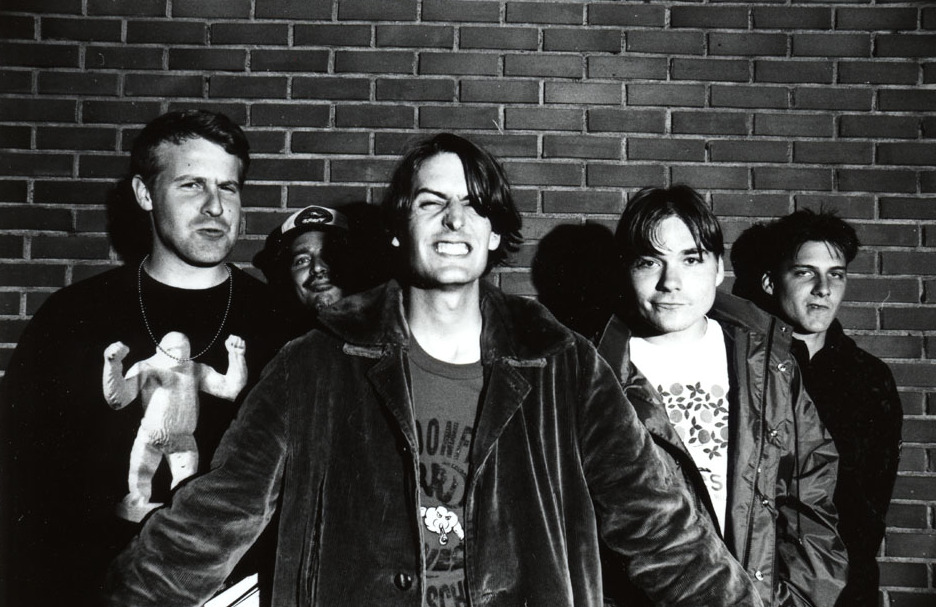
So, how do the 90s band Pavement, who, unlike neoliberalism, really were laissez-faire, fit into this? Pavement were the quintessential 90s anti-sell out band. If anybody embodies not even hatred but simply pure indifference towards the corporate world, particularly as it relates to the music industry, it’s Stephen Malkmus. Wowee Zowee, Pavement’s third studio album, is a literal middle finger to their own prospect of huge success and profit that came off the back of their second album Crooked Rain, Crooked Rain. The question I have isn’t whether Pavement, or a band like them, could gain success now, it’s whether they could gain success without selling out?
Their label Matador is one of the few truly Indie labels left and no doubt had Pavement just started out, they would have refused to sign with the likes of Sub Pop thanks to Warner Music Group’s 49% ownership stake. Yet somehow I can’t imagine Malkmus going on TikTok to make reels to promote his band. I mean, in some ways I can, he’d just have to do it in the most nonchalant way possible. But I can’t help but think that, by his standards, that’s still selling out.
In all fairness, Pavement may have done quite well out of the DIY music culture thing; buying expensive home studio equipment wouldn’t have been too hard coming from middle class Stockton suburbia. Just save here and there, maybe get some stuff for Christmas and birthdays. But that might have been harder for Mark E Smith in Manchester, and let’s be honest, would we have had Pavement without The Fall? Perhaps the most important question is this: could an anti-sell out band have gained the momentum they did, in an industry that is now almost completely sold off to American finance capital, without one day getting so sick of it that they simply hung up the gloves?
I hope the answer to that is yes they could, because Pavement were a band that refused to sell out at the very same time that the whole industry was undergoing this fundamental shift. We need bands like Pavement. And we need a rethinking of how culture is produced, distributed, and consumed. We need a cultural industry that is socialised and that fairly distributes the enormous wealth that the industry generates. One that gives back to grassroots venues and youth-based funding for creative development. This might begin to take shape through redistribution, investment, and socialised ownership structures that pay artists fairly. However, it cannot be detached from the fundamental shift required of the entire global political economy that is necessary to achieve the context in which this becomes possible.
Perhaps a Malkmus-esque refusal to conform to neoliberalism is precisely what we need. A political and economic Wowee-Zowee. Something fundamentally different from what we've heard before but pragmatic and structured enough to offer us some sense.
So, the question now is can the likes of Zack Polanski, Faiza Shaheen, Andy Burnham, AOC, and Pete Buttegeig give us Wowee Zowee? I wonder how many of them have even heard of it?
.svg)


.svg)
.svg)


