

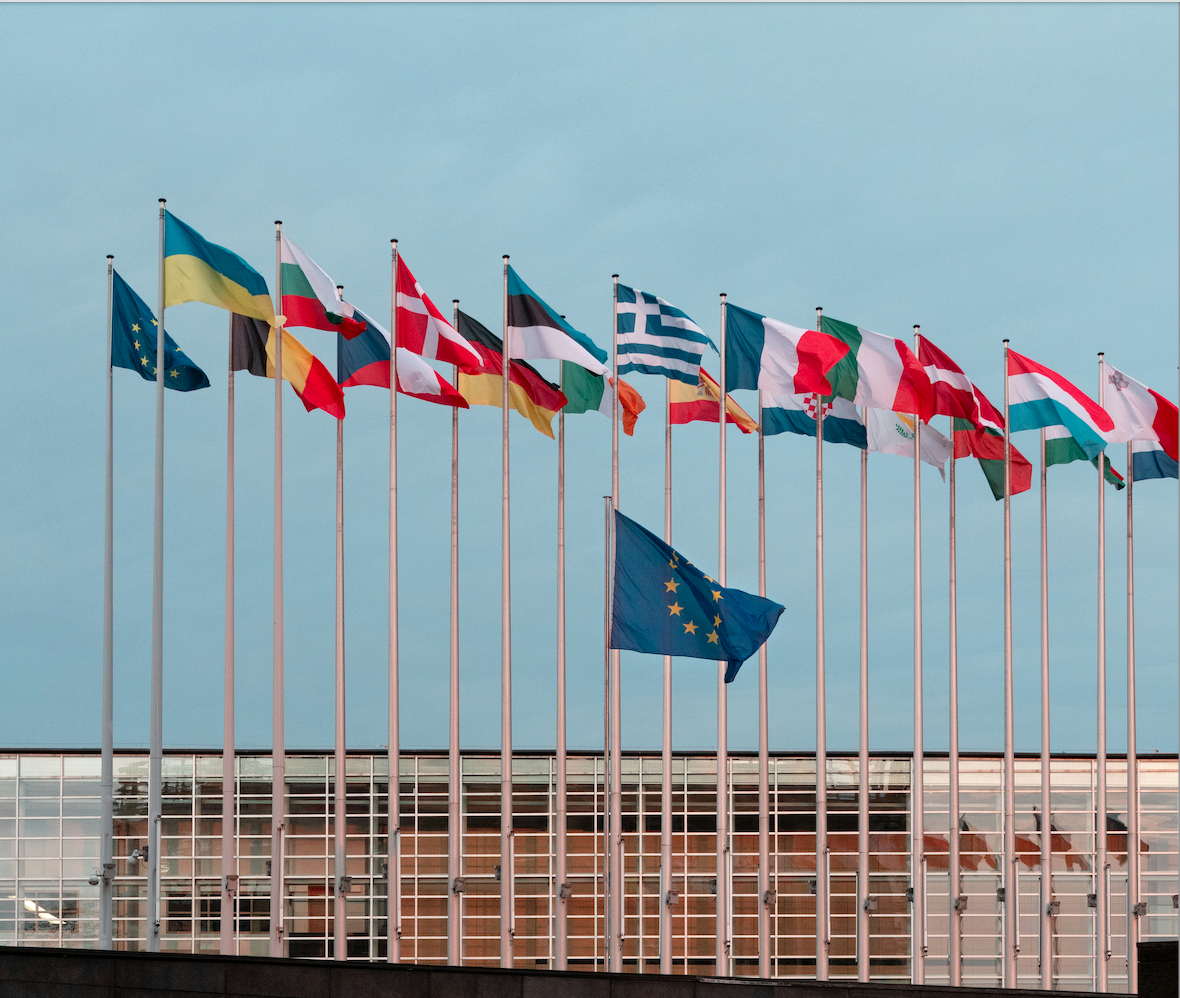
The European Union has long prided itself on being a political project based on the equality of all member states, not a power hierarchy. However, this premise may soon be under great pressure following recent speculation about a new accession system which would sort EU membership into two tiers. This proposal has created both avid supporters and strong opponents towards what could signify a turning point in the history of the institution.
The idea of a two-tier Europe can be traced back to the end of the Cold War, during which there was a widespread consensus that former Communist states would eventually integrate into the European Community. This triggered certain scepticism within established member states, who viewed the addition of Central and Eastern European countries as incompatible with the Community’s values, given their contrasting political, economic, and historical circumstances.
In response, German policymakers proposed a “Europe of concentric circles”, which would involve two separate bands distinguishing the core countries – Germany, France and the Benelux (Belgium, the Netherlands, and Luxembourg) – from those occupying the outer layer. The latter would benefit economically from the Community’s policies whilst holding limited voting and decision-making rights.
The EU ultimately opted for a different approach. The 2000s saw the rapid enlargement of the Union based on unanimity and equal member rights, rather than differential treatment. Although initially successful, it was soon met with significant challenges, including financial crises and deep political polarisation, all of which hindered cooperation as countries prioritised their own national agendas. Further enlargement has been practically stalled since 2013, the year in which Croatia became the most recent member to join. Brexit only exacerbated these tensions, highlighting the fragility and perceived inefficacy of the institution and fuelling widespread concerns regarding its future.
More recent examples of political deadlock can be illustrated by the EU Parliament’s decision to refer the EU-Mercosur trade deal – an agreement which took over 25 years to negotiate – to the Court of Justice, which could take up to two years. In today’s fast-paced geopolitical climate, such move risks European irrelevance, reinforcing the perception of cooperation as slow and highly bureaucratic, giving way to calls for a system with less decision-making entities in favour of greater efficiency.
In principle, a two-tier system could allow the EU to operate as a geopolitical tool, rather than merely an economic and political one. Following Russia’s invasion of Ukraine in 2022, many view Ukraine’s accession as the only plausible means of deterring further Russian pressure. Under current EU terms, however, full membership remains complex. First, the unanimity principle granting every member state equal voting rights also provides them with veto power, which populist governments such as Hungary have used to obstruct Ukraine’s progress. Furthermore, persistent corruption and institutional weaknesses mean Ukraine would still be required to implement years of reforms before full integration. A two-tier approach could therefore offer Ukraine quick access to the EU’s single market and development funds, thus preventing further Russian aggression during the period in which Ukraine would otherwise be required to wait for full membership.
Countries such as France and Germany are key advocates for this reform. In fact, German Finance Minister Lars Klingbeil has already emphasised the need to advance a “two-speed Europe” in which the six leading EU economies – Germany, France, Italy,Spain, the Netherlands and Poland – would assume greater responsibility in areas such as economic policy and defence. He argues that Europe’s heavy dependence on Chinese imports and an increasingly uncertain transatlantic relationship should prompt a stronger push for European independence.
The first tier would effectively transform the EU into a federal system, similar to how US states function, in that federal law becomes the supreme law of the territory whilst individual states retain a certain degree of power. This would address criticisms raised by former Italian Prime Minister Mario Draghi, who has argued that whilst the Union has successfully ‘federated’ in some areas, such as monetary policy through the euro, its failure to do so in others has held Europe back. A federal core, represented by the first tier of six nations, could therefore enable more decisive collective action.
In contrast, member states with smaller economies strongly fear that such reforms would relegate them to a “second-class” status, undermining their influence and imposing a permanent power hierarchy. Even Ukrainian President Volodymyr Zelenskyy has expressed hesitation towards partial membership, arguing that it would be deeply humiliating for a country that has endured years of devastating war. Fast-tracking Ukraine may also appear unfair to candidate countries like Montenegro, which has pursued EU membership for over a decade and has described the proposal as “hardly acceptable”, viewing it an offence to years of “hard work and political dedication”.
However, not all small countries oppose the idea. Albanian Prime Minister Edi Rama has openly supported the model, suggesting that larger countries such as France and Germany – whom he has referred to as “the adults in the family” – should assume greater responsibility and accountability for decision-making. A similar emphasis has been voiced by Georgia’s President Salome Zourabichvili, claiming that the main interests of small countries should be to be part of the community as a family, rather than an equal decision-maker.
Whether or not this project will be put into practice, the reality is that it reflects growing efforts to create a more effective, assertive, and autonomous Europe in response to rising tensions between the world’s major powers. If implemented, the framework could even be expanded to include additional tiers, which could then allow countries such as the UK or beyond Europe to become involved. After all, belonging to a third or fourth tier would represent a purely geopolitical tactic, indicating closer cooperation with an EU that is increasingly more hostile to the US and its declining hegemony.
.svg)
.svg)


.jpg)
.svg)
.svg)