

.svg)
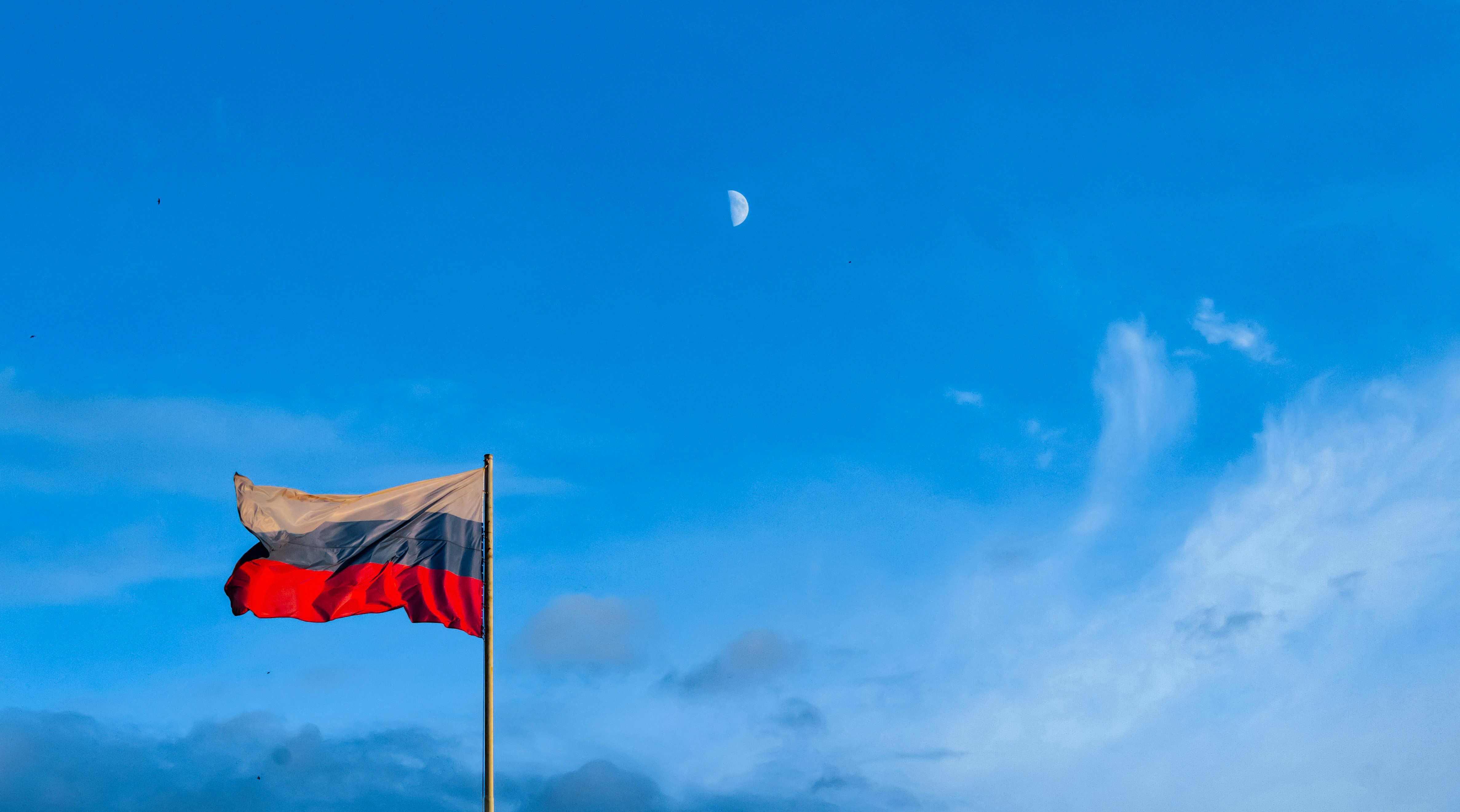
First published in German in 2024, academic Carlo Masala’s ‘If Russia Wins’ imagines what could happen if Russia is successful in its invasion of Ukraine, putting forward a hypothetical narrative set in March 2028. I recently read the book, after it was recommended on The Rest is Politics (where else?), and it has certainly left an impression.
Masala’s key prediction is that Russia’s pursuit of global dominance is unlikely to stop at Ukraine, with the state extending its incursions into Europe by launching an invasion on Narva, a city in Estonia. Justifying its attack by claiming Estonia is oppressing its Russian minority population, he depicts a possible confrontation between the Eurasian superpower and NATO.
Set in the context of the US pivoting towards Asia, Masala suggests the invasion of a small Baltic state like Estonia could result in the breakdown of NATO, with both the US and European nations unwilling to pursue military action. Any case of NATO rejecting the implementation of Article 5, the clause that ensures mutual assistance between its members, is seen as the end of the alliance and the breakdown of European collective security architecture. Essentially, if NATO falls, Russia wins.
With so much going on in the present, focusing on hypotheticals is controversial. The news cycle changes constantly, and with Netanyahu and Trump’s latest war in the Middle East, we can’t predict the next hour, let alone the next year. However, I believe Masala’s account does put forward some important points, and some important warnings, that need to be addressed.
In the book, Russia weaponises illegal immigration to cause a distraction in the Mediterranean, shifting focus away from the Baltic before its invasion of Estonia. Civilian populations from North Africa are captured by Russian militias and placed on boats headed for Europe, manufacturing an ‘invasion’ of illegal immigrants designed to pressure an already strained Europe. Today, fears about immigration are already drastically shaping our politics, seeing the rise of far-right populists throughout Europe, so the possibility of migrants becoming weapons themselves is very real. Furthermore, with rising sea temperatures and more regions becoming uninhabitable, climate change looks set to exacerbate the issue. Future conflicts may not be fought with soldiers, but with the world’s most vulnerable.
Another key takeaway from the book is Europe’s lack of a cohesive strategy, both towards Russia and its future in general. Masala suggests Europe will continue to rely on the United States for military support, regardless of the continent’s current increase in defence spending. The US’s centrality to NATO could be its undoing, as if its most powerful member is unwilling to commit, what are other members expected to do? The rocky relationship between the US and Europe could fell the North Atlantic Treaty Organisation on its own.
Masala ends the book by suggesting Europe needs to increase its independent defence infrastructure, arguing that the only way to prevent future conflicts with Russia or even a hypothetical WW3 is through collective investment. European states are encouraged to bolster their deterrence capabilities, increase their armaments and even implement conscription. Masala acknowledges that this could be rejected, with taxes diverted away from public services, but suggests that strong messaging about what’s at stake would mitigate any opposition.
This is where my agreement with Masala ends. The decimation of public services and an increased focus on foreign policy is likely to only increase the influence of the far-right and far-left throughout European politics. We’ve been warned about the threat of Russia for decades – a better PR campaign seems unlikely change much. Leaving the door open for extremism is as threatening to European security as Russian territorial goals, something neglected by realists like Masala. We may live in a state of global anarchy, but the power of electorates do, and will persist. It is unlikely that domestic politics will be sidelined anytime soon.
So, to summarise, what does this all mean for the future? As much as I disagree with Masala on some points, there’s a lot we can takeaway. The outcome of the war in Ukraine is set to be one of the most defining events of the twenty-first century, whatever it may be. Immigration is set to play a central role in future conflicts. Defence spending is only likely to increase, and if it does, so will political extremism. And most importantly, Europe needs to consolidate a cohesive strategy – the fate of NATO and global peace could be at stake.
.svg)


.jpg)
.svg)
.svg)
