

.svg)
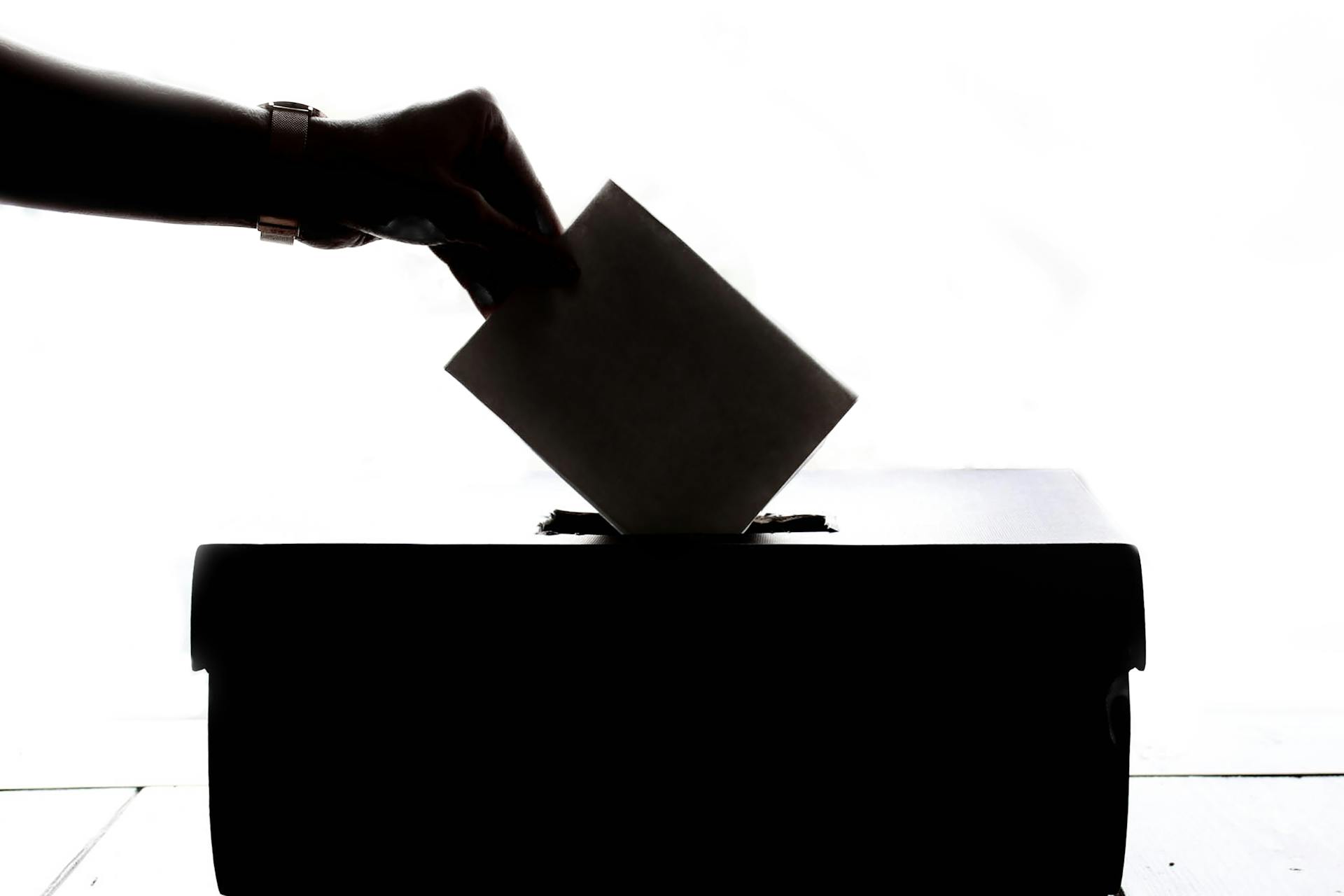
Do you find that your male and female friends hold different political views or vote for different people? The data suggests they do. For men and women under thirty, chances are they live entirely different political lives. Young women aged 18-24 were twice as likely to vote for the Green Party, and men in that same age range were twice as likely to vote for Reform UK in the 2024 General Election. It seems that young men and women continue to head in completely different directions.
This was not always the case. Previously, trends showed that women held more right-wing views due to their exclusion from the workforce and their position in church which provided community and enforced more conservative values. This was the ‘traditional gender gap’. Following greater female representation in the workplace and higher education, women’s support for left-wing politics increased because of the stronger role for the welfare state and policies against workplace discrimination.
In 2025, data found that 20% of young women identified themselves as ‘left’ compared to 13% of men, and 26% of young men identified themselves as ‘right’ compared to 15% of women. This has grown to more extreme parties; Onward research from last year found in men and women aged 16-28, young men increasingly opted for Reform and young women favoured Green.
Why has this changed? And why does the gap continue to grow? Young men and women are experiencing the same cost-of-living issues, stagnant wages and housing market, but are voting so differently. The answer is not economics, it’s about identity.
When researchers controlled for structural factors, the gap persisted culturally and men and women prioritised different issues entirely. The Onward survey found that young women were more likely to name the price of food and energy bills, affordability, and the conflict in Gaza as the issues they found most concerning in politics. For men, it was income tax, crime, and anti-social behaviour, and levels of immigration. Only 22% of young women aged 16-25 selected immigration as a top three issue, compared to 37% of men the same age.
Ask young men and women about equality, and the answers are notably different. When asked if Britain treats men and women equally today, 46% of young men agreed, whereas only 28% of young women agreed. Instead, nearly two thirds of young women believe that society treats women worse, compared to only 27% of men. This gap in male and female voting is not down to disagreeing about economics, but a fundamental difference in how young men and women perceive the society they are a part of.
So, what’s pulling young men rightward?
Starting with the economics, many young men are in precarious employment, experiencing stagnant wages and a lack of job security. They are then increasingly seeing women’s relative gains in education and the workplace as competition. Research on post-industrial economies found that young men experiencing this economic anxiety believe that gender equality policies are something at their expense, and in short, feel left behind.
But it’s not only economic anxiety; young men also feel insecure about their status. Researchers found that young men, across 27 European states, were increasingly likely to view advances in women’s rights as a threat to their opportunities. Sociologists name this ‘modern sexism’: the belief that further progress in women’s equality is leading to discrimination against men. 57% of Gen-Z men globally believe we’ve gone too far promoting women’s equality, and now men are discriminated against, and 60% believe that men are asked to do too much to support equality.
To be clear, the current environment on social media accelerates these views. Some research has found that 80% of 16 and 17-year-olds consume Andrew Tate’s content, whilst fewer than 60% of this group could name the Prime Minister. While all men are not radicalised, these forces are available to young men in a way they were not before, and Reform has proven to be effective in channelling this same resentment.
Meanwhile, young women are moving in the opposite direction.
Consider this: women’s increasing participation in higher education and the workforce has increased their exposure to the inequalities present in these systems. Women are more aware of, and may personally experience, the gender pay gap, unequal childcare burdens, and limits on equality. Research suggests this shapes women’s political preferences, pushing them towards a focus on redistribution, public services, and left-wing parties.
Austerity cuts hit women harder as they are more likely to rely on public services and receive government assistance. Studies of the 2017 and 2019 elections found younger women were more financially pessimistic than men of the same age, and this directly linked to greater Labour support.
Here’s the thing: women are more responsive to being politically shaped by the world around them. Research found that daughters are significantly less likely than sons to inherit their parents’ right-wing political positions. Instead, young women are more commonly politically receptive to their education, peer culture, and broader societal shifts surrounding gender equality.
Then there’s the push factor. The Conservative and Reform framing of culture war politics and ‘anti-woke’ rhetoric has failed to attract young women. Research finds that culturally conservative framing reads as anti-feminist to young female voters. Young women are not ignoring this. They are voting against it.
The gap is not closing, and the evidence suggests it won’t fix itself. Research across 32 European countries suggests the divide is greatest in nations with greater gender equality, meaning progress fails to narrow the gap, instead widening it. This matters beyond the ballot box: young women report lower life satisfaction, higher stress levels, and greater loneliness than their male peers. But not everything in the data points towards a permanent division; the Onward survey found the gap was widest among single young people and nearly disappeared among those married. Is it less to do with fixed identity and instead more to do with the very different lives young men and women are leading today?
Something has shifted in British politics. Young men and women are reading different things, trusting different figures, consuming different types of media, and reaching fundamentally different conclusions about what Britain is.
The ballot box divide is a symptom of this, but there are consequences beyond elections. This shows in wellbeing data, relationship patterns, and teachers’ reports of rising misogyny. If democracies function on the assumption of shared reality, and this assumption is becoming increasingly fragile, what happens if this continues? The fact that we are considering this should worry us, whatever corner of the ballot box we occupy.
Olivia is a final-year Politics and International Relations student with a particular interest in the sociology of politics — especially how identity and culture shape the way people think. Outside of politics, she enjoys reading, walking, and travelling!
.svg)


.jpg)
.svg)
.svg)