

.jpg)
Following suspended Labour MP Andrew Gwynne’s decision to resign from his seat in Gorton and Denton, Labour is preparing itself for another electoral inflection point on February 26th. Having already lost its historic 100 year hold over Caerphilly to Plaid Cymru during its by-election in October of last year, the government will be hoping to avoid any further embarrassment ahead of May’s local elections. Rather than succumbing to his rivals, Kier Starmer will be equally eager to prove that Labour can remain relevant to an increasingly diverse electorate. With the added complexity of Manchester Mayor Andy Burnham’s attempts at standing, the Green Party’s need to demonstrate its electability, and Reform’s fielding of right-wing pundit Matt Goodwin, however, these goals will undoubtedly prove challenging.
Beginning with Burnham, the frost between him and No.10 following the string of criticisms he levied against Starmer’s government in September of last year has yet to thaw. Regardless of any bad blood, the Mayor’s business-friendly, socially equitable “Manchesterism” would have made him a strong candidate for Labour, especially when combined with his positive rating in opinion polls. Following an appeal from Starmer, however, Labour’s National Executive Committee voted 8-1 against allowing Burnham to stand, citing electoral and budgetary concerns.
While necessary for self-preservation, Starmer’s apparent fear of the ‘King in the North’s’ return to Westminster illustrates the extent to which his leadership is growing fragile. The decision has stoked existing internal divisions between the PM and his backbenchers, with 50 Labour MPs signing a letter of protest against the block. Attempting to diffuse tensions, Burnham has since come out in support of chosen candidate Angeliki Stogia, demonstrating the extent to which senior Labour figures recognise the growing electoral risk of appearing divided.
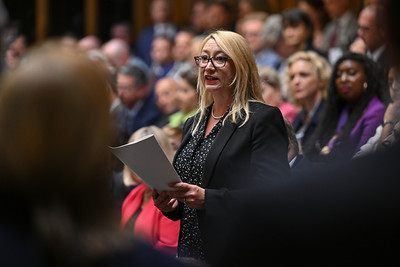
Internal fractures aside, Labour are equally as threatened by forces from the outside. In a similar fashion to the PM’s backbenchers, Green Party Leader Zack Polanski has formally recognised the magnitude of Burnham’s absence. With the Mayor unable to stand, Polanski has framed the by-election as “a pivotal moment for the country”, referring to it as a showdown between his party and Reform. The Green’s candidate, local councillor Hannah Spencer, has echoed such comparisons, similarly labelling the contest as a battle of “hope versus hate”.
To prove its electoral effectiveness, the Green party will be using Gorton and Denton as a litmus test to demonstrate that it can convert its impressive national polling and membership figures into equally as impressive victories. Should the contest devolve into a head-to-head between the Greens and Reform, Polanski will no doubt be pleased to have justified his claims that his party are the natural alternative to a struggling Labour. Should Labour or Reform beat him to the ticket, however, it will be an undeniable setback to a surging campaign which has routinely emphasised the need to appeal to working-class voters.
To Labour’s right, Reform is also looking to leverage the by-election to its advantage. While Nigel Farage’s party came second to Labour in this seat in 2024, the margin between the two was over 35%. Following a tumultuous almost two years in office, however, early polling currently suggests that Reform could flip the seat, with a narrow 3% edge over Labour. While growing dissatisfaction with Starmer’s leadership among left-wing voters may see some red votes turn Green, an early progressive split would be unlikely to guarantee a Reform victory.
Conversely, as demonstrated in Caerphilly, a rallying effect could feasibly unite left-of-centre voters behind a single progressive candidate should Reform be seen to pull too far ahead. For their part, the party’s selection of Goodwin is a particularly strong choice for Reform: a Mancunian local widely recognised for his anti-migration views with established voter name recognition from his regular appearances on GB News. Goodwin will be likely to position his Gorton and Denton campaign as a referendum on Starmer’s leadership, capitalising on a growing politics of discontent.
Despite what the Greens and Reform may claim, it is certainly too early to count Labour out. Polling suggests a large swathe of voters remain undecided, and campaigns are just beginning to gather their steam. To remain competitive, Starmer must ensure the by-election does not dissolve into a two-horse race. Doing so could lead to a repeat of Caerphilly and a destabilisation of his leadership heading into May’s local elections. Given Labour’s need for a ‘win’ on the domestic stage and their robust Greater Manchester base, their campaign will undoubtedly be exhaustive. Should their attempts fall dramatically short, however, Starmer will have to tackle fundamental questions regarding the future of his leadership, despite the impossibility of having to decide whether to allow his preeminent rival permission to stand. For now, though, it’s all eyes on East Manchester.
.svg)
Mark graduated from Newcastle University at the end of 2025 with a Master's in Urban Planning. He's interested in rising inequality and the politics of populism. Alongside politics, he enjoys hiking and travelling.
.svg)


.jpg)
.svg)
.svg)