
Image - boneytongue
On 16 September 2025, a UN Commission of Inquiry found that Israel have been committing a genocide in Gaza since October 7th, 2023. At the time of writing, the current death toll sits at 70,668, with 171,152 injuries (around 7.6% of the entire population). However, in these past 2 years, Eurovision Song Contest have deemed this humanitarian crisis too ‘political’ to lead to the exclusion of Israel from their contest.
Eurovision has always branded themselves as politically neutral, with many rules preventing political speech and content in the competition. During the 2025 event, viewers were reminded of this stance: the words “Eurovision is non-political strictly neutral, doesn’t matter if you’re good or brutal” were branded over an electronic dance beat, accompanied by a slightly bizarre dance routine. By recognising the “brutality” of some of their competitors, seemingly attempting to bring a satirical light to the elephant-in-the-room of Israel’s participation, Eurovision raises the fundamental question: does neutrality during a genocide speak more words than they intended?
However, these claims of neutrality do not stop the public from including their political views into the competition. Ukraine’s 2022 victory has been widely interpreted as a demonstration of solidarity during Russia’s attacks - with 439 points out of a possible 468, no country had ever received so many points from the public, far more than what was expected from them. Even some politicians are unafraid to involve their ideologies in the competition, such as Ester Muñoz (spokesperson for the Spanish People’s Party). In this year’s competition, she took to her X account to post what translates to “Another year I'm going to vote for Israel without having heard the song.” – a comment that reflects her right-wing political views and stance with Israel. In 2013, a YouGov poll found that 75% of Brits believe some nations don’t have a real chance of winning the competition due to political voting.
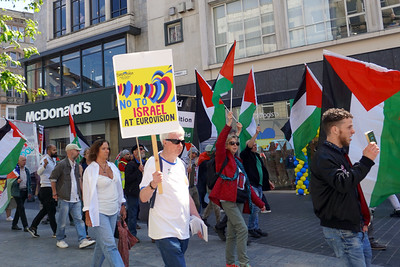
For years now, protestors have taken to streets across the world to voice their discontent with Israel’s participation in Eurovision. The thumbnail image provided demonstrates a protest in the contest’s host city of Liverpool in May2023; 5 months before many falsely claim the war began. In reality, Israel’s attempted erasure of Palestinians and Arabs dates to 1948 (Israel’s first formal recognition as a state) – leading to long opposition by many nations and fans to their participation in Eurovision. Lebanon, for example, have never officially recognised Israel as a state due to these historical tensions – meaning their first attempt at participating in Eurovision (2005) was rejected as they could not legally broadcast Israel’s performance, which is required by the EBU (European Broadcasting Union).
Hamas’ attack on October 7th, 2023, greatly intensified conflicts. Israel began what is today recognised as a genocide towards Palestinians, subsequently intensifying Eurovision protests. Protesters coined the term “Welcome to Genocide Song Contest”: a phrase that gained traction in 2024 during protests in Eurovision’s hosting city of Malmö, Sweden. The term stuck around in 2025, as seen in Eurovision’s “turquoise carpet” event being met with protestors waving Palestinian flags and banners containing the phrase when Israel’s act Yuval Raphael stepped out in Basel, Switzerland. When stepping out in the competition itself, Eurovision used its notorious technology to drown out the hateful chants, booing and whistleblowing, as exposed by contrasts of social media videos to her broadcasted performance. Protestors ran to the stage, attempting to invade and disrupt her act, only to be met with the tight grips of security.
Even her first appearance on screens caused protest, especially in Spain. Spanish commentators saw her introduction to the contest an opportunity to voice their disapproval of Israel’s participation. Whilst her introduction video played in the background, they voiced:
“The victims of Israel’s attacks in Gaza have surpassed 50,000 people, and among them, more than 15,000 children, according to the United Nations. This is not a protest against a specific country; this is a call for peace, justice and respect for human rights in accordance with the integral values and pacifism of the Eurovision Song Contest.”
The EBU called this a political statement, stating that ‘victim figures have no place in an apolitical entertainment program’ and threatening the Spanish with fines. However, this did not stop the Spanish broadcasters. Their response was to open the grand final with a message that read: ‘When human rights are at stake, silence is not an option. Peace and Justice for Palestine’.
A group named Artists for Palestine UK consisting of Eurovision alumni also released a petition calling for Israel’s exclusion from the contest in 2025. It was signed by 72 ex-contestants, such as Salvador Sobral (winner, 2017), and Charlie McGettigan (co-winner, 1994).
Israel’s inclusion and success in 2025 only snowballed anger towards the contest. Much to many nations dismay, in early December 2025, the EBU released a statement saying members decided not to call a formal vote on whether Israel should take part in 2026, confirming their definite place in the contest. Martin Green, Director of Eurovision, described the debate that formulated this decision as “full, frank, honest, and quite moving”. He further described that “they really came together on a belief that Eurovision Song Contest shouldn’t be used as a political theatre, it must retain some sense of neutrality”.
The Spanish demonstrations against Israel in 2025 reflect their decision to with draw entirely from the 2026 contest in protest, along with 4 other countries: Netherlands, Ireland, Slovenia, and Iceland. This matches the competitions record for boycotting nations – set in 1970, however due to unhappiness with competition rules rather than a broader political statement. The Spanish broadcasting agency (RTVE) also led calls for a secret ballot to debate Israel’s participation. The EBU’s own bye-laws state that a secret ballot must be adopted if requested by 5 or more members; at least 8 were requesting a vote on Israel’s participation, yet were ignored.
Alike 2025’s petition, recent Eurovision alumni have begun speaking out. After his win for Austria in 2025, artist JJ has recently called for the removal of Israel – his silence during participation is likely explained by the artist code of conduct which reads ‘respect political neutrality’. He stated: "I would like Eurovision to beheld in Vienna next year and without Israel. But the ball is in the EBU's court. We, the artists, can only raise our voices on the matter". 2024 winner Nemo has even returned their trophy to the EBU headquarters in Geneva to protest. Taking to Instagram, they stated:
“The contest was repeatedly used to soften the image of a state accused of severe wrong doing, all while the EBU insisted Eurovision is “non-political”. And when entire countries withdraw over this contradiction, it should be clear that something is deeply wrong”. They further claim that, due to Israel’s continued participation, they “no longer feel that this trophy belongs on [their] shelf”.
For 2026, this is certainly not the end of protest. Much of the backlash seen in previous competitions has been extremely close to or during the event, such as petitions, city protests and broadcasting scandals. With opposition only inclining, it is almost certain backlash will mirror this leading up to May 2026, possibly like we have never seen before in Eurovision.
Despite their historical claims of neutrality, some events lead fans to speculate a bias in the competition’s organisers. Whilst the EBU’s condemned Spanish commentary on Yuval Raphael for example, stating there was no place for ‘victim figures’ in Eurovision, there was no similar discrepancy when Raphael consistently branded herself as a victim of the October 7th attacks to fuel her image and gain sympathy. The topic became the emphasis of many worldwide headlines.
Online, many have speculated that a bias and failure to remove Israel is due to the contests largest private sponsor, Moroccan oil. Moroccan oil is an Israeli cosmetics/haircare brand, widely considered as the primary private sponsor in recent years, and being dubbed the “Presenting Partner” of the contest since2024. Removing Israel would likely result in the company revoking sponsorship, losing major support and tens of millions of euros for the event.
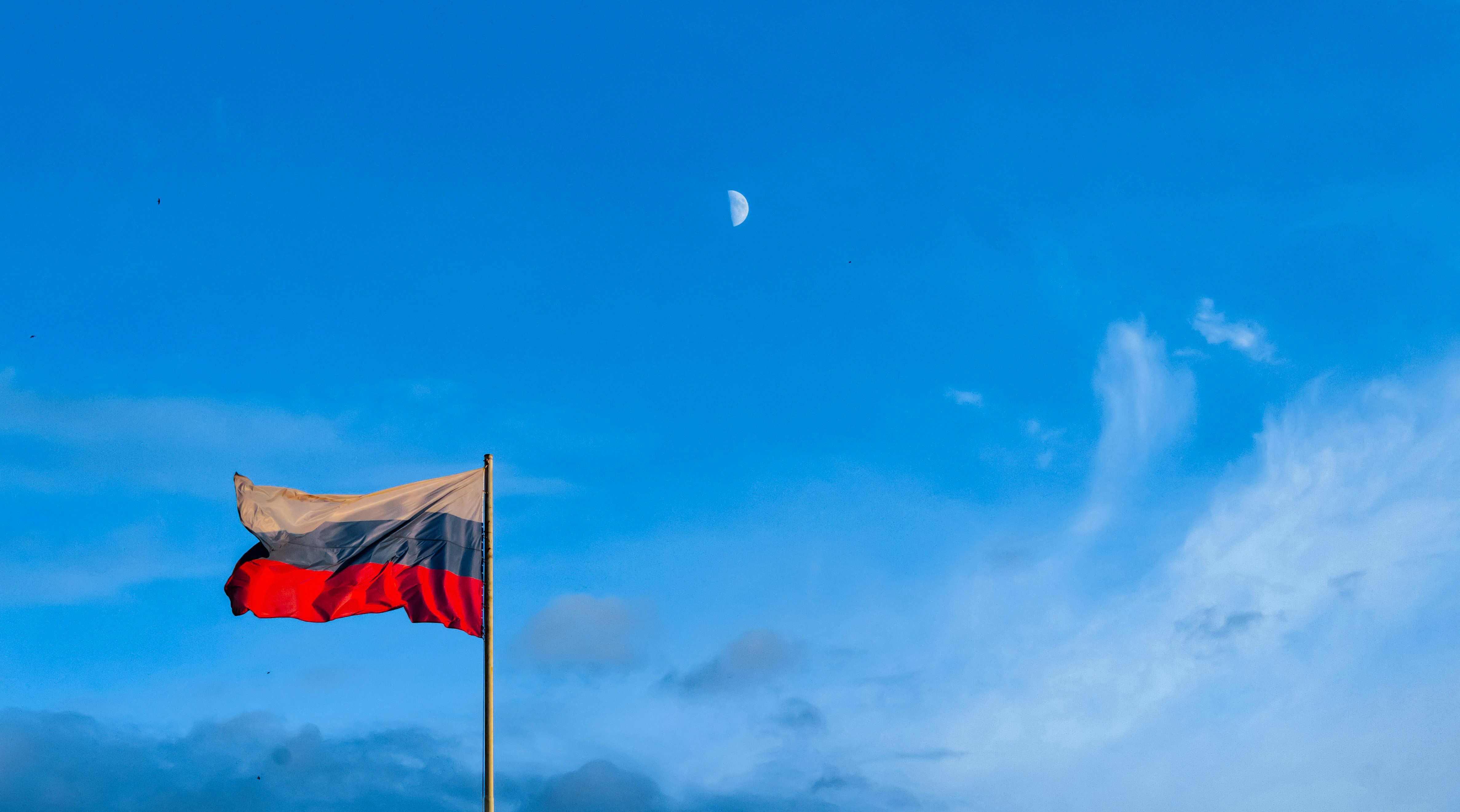
Furthermore, many draw similarities between the EBU’s stance with Israel and previous stance taken with Russia. On February 25 2022, the day after Russia first invaded Ukraine, the EBU announced in an official statement that Russia would be disqualified from the contest immediately based on ‘rules of the event and the values of the EBU’. They further state that ‘in light of the unprecedented crisis in Ukraine, Russian entry in this year’s [2022] contest would bring the competition into disrepute’.
Instantly, parallels are obvious. By mentioning ‘the unprecedented crisis in Ukraine’, their apolitical stance is already contradicted. Further, the fact that they acted in concern of ‘disrepute’ in Russia’s case, however unconcern at mass disrepute towards Israel’s inclusion, is both confusing and hypocritical. By excluding one war-inciting nation on the grounds of politics yet turning a blind eye to another on the same grounds, any claim of neutrality effectively becomes null. Perhaps this is explained by Eurovision having no sponsorship ties to Russia as they do to Israel.
Eurovision’s claims of political neutrality whilst their competition contains bias, widespread political voting and excluding a nation based on war are therefore laughable. Such a claim, even in its weakness, stated at a time of mass human rights violations, no longer reflects neutrality, only complicity. Going into 2026, Eurovision’s official slogan “united by music” is overshadowed by the disunity of mass protests, petitions, nation withdrawals and trends such as #BoycottEurovision2026. The question arises: will Eurovision finally ditch their fictitious apolitical stance, and do the right thing for its fans and innocent Palestinians?
.svg)
Lara is a Politics student at the University of Leeds. She is specifically interested in USA and Global politics. Elsewhere, she enjoys baking and watching football.
.svg)


.jpg)
.svg)
.svg)