

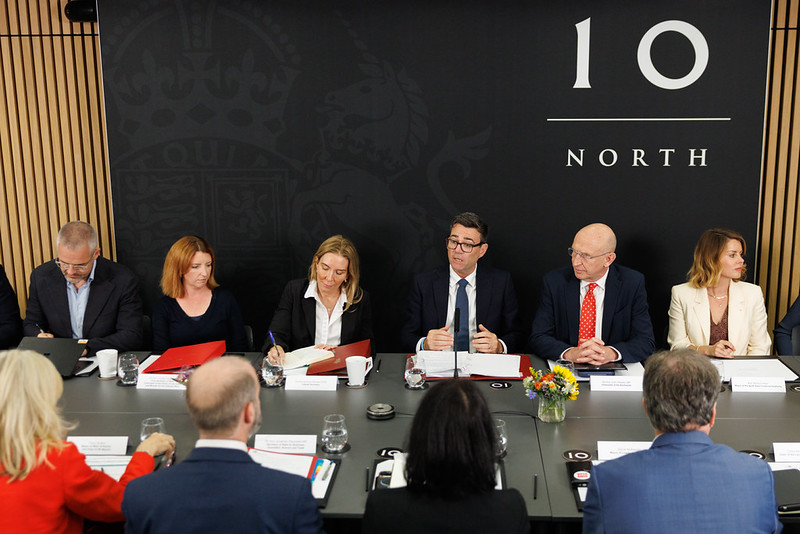
After a decisive win for the former Mayor of Greater Manchester Andy Burnham in the Makerfield by-election, the Labour Party moved swiftly to elect him as Sir Keir Stamer’s successor, making party leader and the new Prime Minister. He took office on 20th July 2026 and began appointing his cabinet immediately, with his ministerial appointments completed just three days later. Some 82 ministers took up new roles, including 24 entering government for the very first time. These cabinet members are crucial to the running of government and act as major indications for how a new PM intends to govern, providing an insight to priorities and political leaning.
For the first time in British political history, the cabinet is half female, a huge change from just under fifty years ago when PM Margaret Thatcher refused to appoint a single woman to a cabinet role. Ethnic minority representation remains similar to the previous government, with four members of the cabinet from minority backgrounds. Divisively, politicians from the North West make up just over a quarter of the cabinet, despite only 11% of the UK population living there. Whilst this shift north was expected, perhaps the most surprising shift from a left leaning PM is the increase in privately educated members of the cabinet. Now, 22% of the cabinet has been educated mainly at private school, more than three times the rate among the general population and a huge increase from just 8% under Starmer. Another surprise was the appointment of the most Oxbridge educated cabinet of the modern era, with seventeen of twenty-eight ministers having attended.
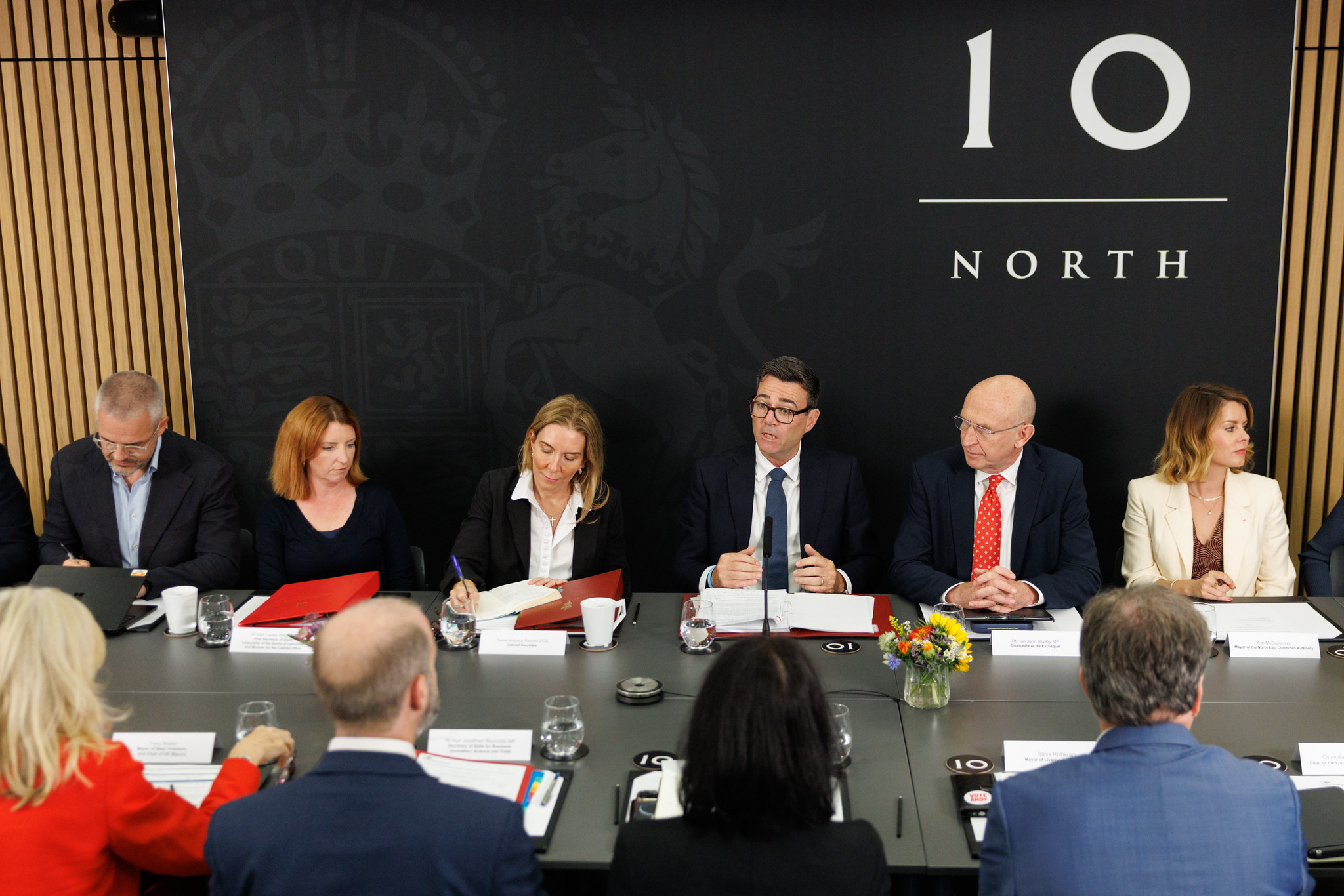
Perhaps the clearest of Burnham’s priorities is his focus on devolution from Whitehall, posing his home city of Manchester as the key area for this change to take place. The PM moved quickly with plans for “Number 10 North”, which has been received in a mixed manner across the country. Some believe the tradition of government in the capital should stay in place, whilst others argue it continues to neglect Scotland, Wales, further northern England and the Midlands.
A close ally of Burnham’s who has been assisting in setting up the move to the North is Louise Haigh, who, as well as being appointed First Secretary of State, Chancellor of the Duchy of Lancaster, and Minister for the Cabinet Office, has been given the role of leading No.10 North. Her return to cabinet, following her resignation in late 2024 as transport secretary, means she replaces David Lammy as acting deputy PM, with Lammy left out of the top roles.
In his first speech as PM in front of Number 10, Burnham signalled his intention to tackle homelessness and deal with the housing crisis. He announced he would ‘end rough sleeping in our country’ which was followed by a press release promising an extra £340m for the task over the next five years from within the housing department budget. He also promised support for young people getting into work and on the property ladder, more council housing and an increase to defence funding. His focus on housing was supported by the return of Angela Rayner to the cabinet as Secretary of State for Housing, Communities and Local Government. Rayner has long been a prominent and relatively popular figure on the left of the party, previously forced to resign due to underpaid stamp duty. Her return promises a focus on affordable housing for families, one of her main priorities during her previous time in cabinet.
A fairly surprising appointment was that of John Healey (the former defence secretary) as Chancellor of the Exchequer. Journalists suggested that Ed Miliband or Shabana Mahmood could be in the running for the role. In June, Healey had resigned from Starmer’s government over disagreements with government spending plans. It will now be his task to find additional funding for the defence budget, something the new PM has promised. Burnham and Healey are also determined to stick within the fiscal rules set out by their predecessors Keir Starmer and Rachel Reeves, aiming to reduce borrowing and limit the amount of debt that the country accrues. Former chancellor Reeves, a staunch Starmer loyalist, already confirmed she would be leaving the role and reportedly turned down the offer of another undisclosed position. Her sister, Ellie Reeves, previously in shadow positions, was given the role of Attorney General.
Healey is replaced by Wes Streeting as Secretary of State for Defence. Streeting resigned in the hope to challenge Starmer for the party leadership and his loss was a relatively big blow for the party. As health secretary he brought in a number of reforms to the NHS and oversaw a drop in the wait list by 6.4% since July 2024. His ability to drive reform will be a key factor to ensuring increased defence spending is put into practice, boosting the work previously done by Healey. The new Defence Investment Plan includes £10.3 billion in projected “efficiencies” to help deliver in the proposed budget changes. Streeting’s previous role is taken on by Yvette Cooper, formerly the foreign secretary.
Significantly, some ministers have retained their roles, including Shabana Mahmood as Secretary of State for the Home Department. This move has gained Burnham criticism from the left of the party, as well as the public who have criticised Mahmood’s harsh immigration policies that some have labelled as dehumanising immigrants. She has suggested placing asylum seekers in disused army barracks and setting up systems to more swiftly deport those whose claims are rejected. Whilst many were hoping Burnham would shift home and foreign policies further left, this continuity seems unlikely to move away from Starmerism. Pat McFadden also keeps his role as Secretary of State for Work and Pensions, whilst Heidi Alexander remains Secretary of State for Transport. Close friend of Burnham, Lisa Nandy, retains her role as Secretary of State for Digital, Culture, Media and Sport.
After missing out on the Chancellor role, Ed Miliband has been promoted from his role focusing on net zero to Secretary of State for Foreign, Commonwealth, and Development Affairs. The former leader of the Labour party is seen as having widely delivered on the government’s agenda for net zero and energy, with a huge focus on Great British Energy. As a major figure within the party, Miliband has some international recognition, whilst Burnham’s profile is largely unknown outside of the UK. It is unsurprising to see a big name from the New Labour era of Burnham’s first tenure as an MP in a prominent cabinet position. He has indicated a focus on domestic over foreign affairs and Miliband’s record matches this: whilst Leader of the Opposition, he famously whipped Labour peers to oppose intervention within Syria. This new position therefore indicates a potential hands-off style towards foreign affairs.
Burnham has also made a number of changes to the structure of government. His appointments see the first ever Minister for Artificial Intelligence with the role given to Kanishka Narayan. Additionally, Burnham has demonstrated his shifting approach in governance as he scrapped the Department for Science, Technology and Innovation. He announced that the department has been merged with that for business and trade, with Jonathan Reynolds appointed as the Secretary of State for Business, Innovation, Science and Trade. This is a reverse of the changes made by Rishi Sunak who established the DSIT during his time as PM. The move from Burnham has been criticised by those in the scientific field. Paul Nightingale, an expert on science policy from the University of Sussex accused Burnham of ‘yet another reorganisation after a long period of policy turmoil, which increases uncertainty for investors and industry’. He also commented that he hoped this new approach could integrate science within industry, repairing a previous ‘hands off approach’.
Both Labour supporters and opposition parties moved quickly to criticise the lack of change within the cabinet. Leader of the Conservative Party Kemi Badenoch told Sky News that ‘it doesn’t look like a new cabinet’ and labelled the government as ‘stale’ after the reappointment of previously resigned ministers. She also accused Burnham of appointing people who had worked for the party or trade unions, with a lack of experience outside the political system. Badenoch did however suggest her speech was an ‘optimistic’ one, focusing on what changes MPs from all parties could make to the country. Ed Davey meanwhile refrained from commenting on particular cabinet ministers, but made clear that ‘if Andy Burnham is serious about cross party working, my door is open.’
This suggestion of a more cross party approach could be beneficial within the current era of British politics. With Burnham being the seventh prime minister in ten years, the continual political turmoil and snap changes are preventing big progress from happening. The public are tired of a lack of leadership and a lack of confidence in their leaders, frustrated by constant infighting and attempted coups from fellow party members. A more collaborative approach has already begun under Burnham as he called to meet with Badenoch and Davey to discuss social care, some might argue it is a step in the right direction.
After poor local election results in May, many within the Labour Party are hoping a change in leadership could be their redemption. According to a poll by PollCheck on leadership approval ratings, Andy Burnham comes out on top, with a +16% approval rating, followed by Badenoch and Davey with +1%. In the same poll, Starmer had fallen to a rating of -38%, indicating that Burnham could bring a more likeable face to the party leadership.
Whilst Burnham seems to be faring well with the public so far, his government still has everything left to prove to deliver the change the party’s manifesto promised during the general election campaign of 2024. The cabinet appointments do not indicate as big a departure from the Starmer government as critics would have liked to have seen. In the coming months, all eyes with be on Burnham and his team, with hopes to retain the newest Prime Minister until the next election arrives in 2029.
.svg)
Megan is an MA History student at the University of Birmingham. Her main interests lie in UK politics and current affairs, interested in social and cultural impacts. Aside from politics, she enjoys visiting historical sites, reading and hiking!
.svg)


.svg)
.svg)

