

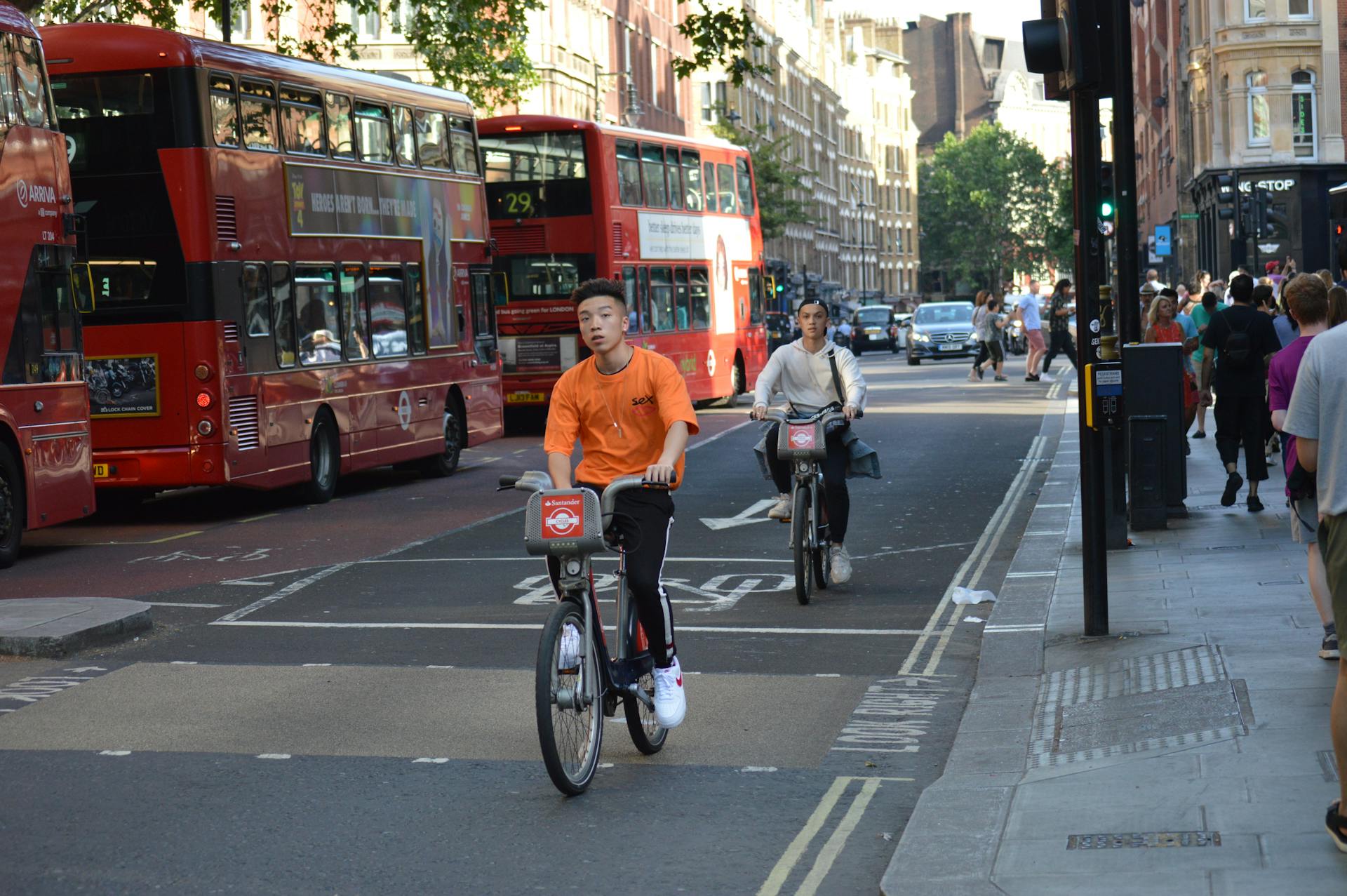
For over a decade, domestic transport has remained the largest source of UK carbon emissions, now accounting for over 30% of national annual release. Since the Covid-19 pandemic, the total number of miles travelled by car has increased by an average of 4% per year, while the overall number of bus miles has consistently fallen. To meet its 2050 climate obligations, the Department for Transport's decarbonisation plan recognises that the government must decouple transport from fossil fuels to reverse these trends and to improve public health.
Despite the need to reduce car ownership, the number of personal vehicles on UK roads has increased yearly since 2014 and now stands at over 42 million. While their market share has increased, electric vehicles still make up only a small minority of overall numbers, as the automotive sector overall remains closely linked to the oil industry. The continued rise in ownership has persisted despite associated costs consistently outpacing inflation over the last decade.
Transport for London now estimates the average annual cost of maintaining a car to be in excess of £3000, before accounting for parking and additional charges. Over two-thirds of surveyed UK adults, however, said they had no plans to sell their vehicles, instead considering them essential in maintaining their current lifestyles.
In response to rising ownership levels and increasing traffic, several UK cities have implemented congestion zones to deter city-centre driving and improve public health by issuing emissions-tied charges. While these schemes have improved urban air quality, their impact on congestion has been comparatively minor, with London’s Ultra Low Emissions Zone yielding only a slight reduction. Rising car ownership despite the expansion of congestion zone schemes suggests that the government must improve the pull factors of public transport and active travel, alongside its attempts to disincentivise driving.
Government and progressive think tanks generally support this diagnosis. The government's Transport Committee and Centre for Cities both recognise that low-quality public transport and active travel infrastructure are further entrenching car dependency across the UK. Public transport ticket prices, in particular, are directly contributing to the increasing congestion that low emissions zone schemes aim to address. In 2025, increasing car traffic led to London, Birmingham, and Manchester each suffering congestion-related delays in excess of 90 minutes.
Chronic underinvestment in infrastructure has resulted in a postcode lottery of public transport quality nationally. Between 2013 and 2023, London received up to 230% more transport investment per person than comparable regions in England. Outside of urban centres, in particular, access to reliable services is especially poor.
Environmental protection group, Campaign to Protect Rural England, regard over half of North Eastern and South Western rural communities as “transport deserts” based on their lack of connectivity to inter-regional services. Poor efficiency and high ticket prices affect almost all public transport modes as well as geographies, as operator league tables reflect increased service cancellations and ticket prices outpacing inflation.
At the local authority level, underinvestment in non-driving infrastructure regularly polls as a top voter concern according to YouGov, alongside the declining quality of community high streets. As less than one in five of us report walking or using a wheelchair every day, and less than half of us think it is safe to cycle, it comes as little surprise that high street footfall is declining.
In response, the government’s active travel agency, Active Travel England (ATE), has allocated funds to improve walking, wheeling, and cycling infrastructure countrywide. The challenge in delivering suitable projects, however, remains considerable, with ATE predicted to have fallen short of its 2025 targets, owing to the considerable amount of additional funding necessary to support large-scale schemes.
The government has said it recognises that more work is needed to realise its goal of full decarbonisation by 2050. For domestic transport, this will necessitate a total reconsideration of how we prioritise road users to benefit those using public transport. Similarly, if half of all local journeys are to become active ones by 2030, our neighbourhoods and communities will need to improve the perceived safety and enjoyment of walking, wheeling, and cycling.
Rather than solely representing a problem, however, a domestic transport revolution could equally offer renewal. If we were to calm traffic and increase the attractiveness of active travel in and around our high streets, research from Living Streets suggests we could expect increased footfall, economic activity, and public health benefits. The case for reducing car dependency in the UK must not, therefore, remain one of if, but, instead, become one of how.
.svg)
Mark graduated from Newcastle University at the end of 2025 with a Master's in Urban Planning. He's interested in rising inequality and the politics of populism. Alongside politics, he enjoys hiking and travelling.
.svg)




.svg)
.svg)

